Ever wonder how a huge market shock can build lasting strength?
Back in 1929, many people bet on stocks using borrowed money, and everything came crashing down. Ordinary folks saw their savings disappear in an instant, shaking their trust in investing.
Yet in that chaos, important lessons were learned that made our economy more careful and strong. Today, we use those insights to shape the financial rules and practices we follow.
Historical Context and Significance of the Stock Market Crash of 1929
The stock market crash of 1929 marked the end of the optimistic mood during the Roaring 20s. U.S. markets hit record highs, with the DJIA peaking on September 3, 1929. Many investors, including regular folks, wagered their life savings on stocks fueled by wild speculation, which pushed prices far above what companies were actually earning. Trading on borrowed money made things worse, setting the stage for a disaster.
On October 24, 1929, known as Black Thursday, a sudden rush to sell caused 12.9 million shares to change hands. Investors watched in disbelief as prices dropped quickly and trust in the market faded. Then, just a few days later on Black Tuesday, the turmoil hit its peak. Around 16.4 million shares were traded, and nearly $14 billion in market value vanished in what felt like moments. The shock spread fast across trading floors, deeply shaking investor confidence.
The crash had effects that went well beyond Wall Street. It changed the way people thought about risk and made both investors and policymakers more cautious about where they put their money. Looking back, it’s clear that the frantic gains turned into widespread panic, teaching everyone a hard lesson about the dangers of unstable markets. The events of 1929 still remind us why strong market rules are so important today.
Precursors to the 1929 Market Collapse: Speculation and Margin Buying
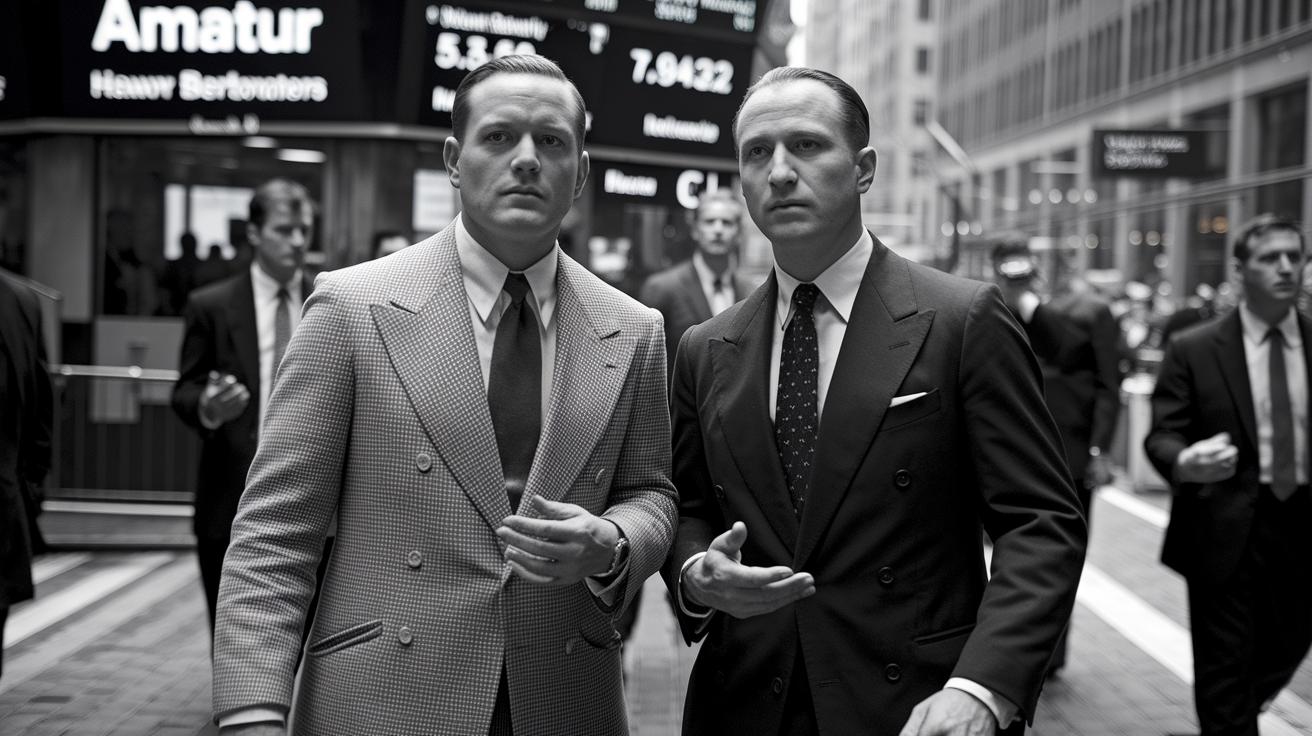
Back in 1928 and 1929, rules changed so that investors only needed 10% of the stock’s value to borrow money. This meant that even folks without a lot of cash could jump into the stock market. Stock prices shot up, way beyond what the companies’ earnings could really support.
Investors piled into stocks without fully grasping the risks. It was a bit like buying a toy on credit without checking if it was really worth it. The easy access to cheap credit made it seem like there was no harm, even though the market was showing clear warning signs. In some areas, the price-to-earnings ratios reached over 30, a hint that prices were far out of sync with actual company performance.
This kind of risky buying left the market on shaky ground. With heavy speculation and a shaky foundation, the market was set for a big fall. The burst of inflated values eventually led to a crash that changed history.
Key Events and Timeline of the Wall Street Crash of 1929
On October 24, 1929, known as Black Thursday, the market saw an unexpected surge in activity. Nearly 12.9 million shares changed hands in one day, sending stock prices tumbling by about 11%. This huge sell-off immediately shook investor confidence and set up even bigger drops in the days that followed.
Then came Black Monday on October 28, 1929, and it hit the market hard once again. The Dow Jones Industrial Average, a key measure of market health (think of it as a quick report card for stocks), plunged by 13% in just one day. It was a moment that made many investors feel like they were watching their savings disappear in a powerful wind.
The turmoil reached its peak on October 29, 1929, a day that came to be known as Black Tuesday. On that single day, 16.4 million shares were traded, and the market lost another 12% right at the start of the session. In a flash, about $14 billion in market value was wiped out. This flurry of trades and the sudden drop created a perfect storm of financial chaos that rippled across the economy.
The decline didn’t stop there. On October 30 and 31, the market kept going down as investor confidence continued to vanish. Although these days weren’t as dramatic as the earlier ones, the ongoing losses added to a lingering sense of uncertainty and stress in the overall financial system.
This timeline isn’t just about big numbers and percentages, it tells the story of how each day’s events built on the last, pushing investor panic to new heights. It was a time that truly tested the strength of the market and the confidence of everyday investors.
Key Figures and Institutions in the 1929 Financial Collapse

Some key individuals stepped up during the 1929 Wall Street crash, trying hard to slow the rapid losses. Richard Whitney led a small group of top bankers who met in a corner office. Imagine a few seasoned experts huddled around a table, scrambling for quick fixes as market values dropped fast.
Charles E. Mitchell from National City Bank teamed up with partners at J.P. Morgan on Black Monday. They pooled their funds to buy stocks, hoping this move would ease the panic gripping the market. Yet, their plan couldn't restore lasting trust, revealing how risky practices like heavy borrowing had already shaken the system.
At the same time, officials at the New York Stock Exchange struggled to manage the chaos. Their failure to enforce margin controls, rules that limit how much you can borrow for buying stocks, highlighted one of the main reasons behind the crash. As stock prices tumbled, investors saw firsthand how fragile the market really was when confidence vanished.
Stock Market Crash 1929: Economic Resilience Emerges
By the end of 1930, about 371 U.S. banks had closed, leaving many families without their savings. Unemployment jumped from roughly 3% in 1929 to nearly 9% in 1930, and by 1933, it hit 25%. This wasn’t just a local issue, the shock spread around the world. In the U.S., the economy shrank by about 30% between 1929 and 1933, affecting nearly every part of society.
International markets took a big hit too. In London, the market fell by 23% in 1929, while Berlin saw a 45% drop. Consumer confidence took a dive, and people started cutting back on spending because uncertainty replaced optimism. Businesses struggled, and simple, everyday life turned into a series of tough choices and constant financial challenges.
It almost felt like the economy had to start from scratch. Investors and policymakers had a steep learning curve as they worked hard to stabilize the financial system and rebuild trust. Small businesses, in particular, had to adjust quickly to a new reality where caution became the norm.
Through all this hardship, a spirit of resilience began to shine through communities. Folks started saving in new ways and developed different spending habits, laying the groundwork for reforms that would eventually reshape the U.S. financial system.
Analysis of Crash Causes: Bubble, Regulation, and Psychology

The crash happened because too many factors piled up until the system simply couldn’t hold it together. Stock prices had shot up way beyond what company earnings could back up. In many industries, the price-to-earnings ratio reached over 30, which was a red flag for overvaluation. Investors even piled into stocks using borrowed money – think of it like buying on credit without strict checks, made even riskier by soft margin call rules and loose trading-halt regulations. With weak federal oversight, the market was like a powder keg waiting for a spark.
Then, a sudden change in investor mood turned the whole situation upside down. Margin calls jolted trading floors, forcing many folks to sell off their holdings quickly, even if they barely had time to figure things out. Imagine an investor in 1929 watching his portfolio shrink overnight because he had to sell his stocks in a hurry. It really shows how quickly panic can take over when things go south.
Our minds played a part too, with biases like herd behavior and overconfidence making the situation worse. When one investor sold off his shares, others jumped on the bandwagon without really checking the risks, turning a small issue into a major meltdown. This mix of personal psychology and market forces shows how our collective decision-making can spiral out of control.
All these pieces – inflated asset values, lax regulation, and mounting psychological pressure – ended up feeding off one another. They drained investor trust completely, and before anyone knew it, the market buckled under its own weight.
Aftermath, Reforms, and Legacy of the 1929 Market Crash
After the stock market crash in 1929, lawmakers made big changes to stop future financial disasters. They passed the Glass-Steagall Act in 1933, which kept commercial banks separate from investment banks. This change helped reduce risky bets, and at the same time, the FDIC was created to protect depositors and restore trust in the system.
Next, in 1934, the Securities and Exchange Commission (SEC) was formed under the Securities Exchange Act. This new agency kept a careful watch over trading practices, making sure that investors were treated fairly and that the market stayed honest.
The government also shifted its approach with a focus on countercyclical spending, which means spending more money during economic slowdowns, to help stabilize the economy. These reforms brought in tighter margin limits and stronger protections for investors, setting new rules that guided financial markets for decades.
Even today, many of these changes influence the way we handle money and protect our savings. It all serves as a solid reminder that smart rules can build a safer market and give us confidence that we’re better protected against another big crash.
Final Words
In the action, we traced the events that led to the stock market crash 1929, from sky-high speculation and unchecked margin buying to the dramatic trading days that shook the market. We saw how key figures and institutions tried to steady the storm, and how the crash paved the way for reforms aimed at preventing a similar collapse. This look back offers insights and reassurance for those seeking clarity about market fluctuations, leaving us with hope and a stronger grasp of financial resilience.
FAQ
What does the stock market crash 1929 graph show?
The stock market crash 1929 graph shows a steep drop from a high point to a rapid decline in October 1929, highlighting soaring trading volumes, major losses in market value, and the onset of panic selling.
Why did the stock market crash in 1929?
The stock market crash in 1929 happened due to heavy speculation and margin buying that created overvalued stocks, which led to panic selling on key days like Black Thursday and Black Tuesday.
What are some key facts about the 1929 stock market crash?
The 1929 stock market crash featured record trading volumes, drastic percentage drops in index values, and billions in market value lost, which triggered bank failures and widespread economic decline.
What caused the stock market crash in the 1920s and 1929?
The crash was caused by a market bubble fueled by excessive margin buying and overinflated stock prices, combined with weak regulations and herd behavior that turned optimism into panic.
Who profited from the 1929 stock market crash?
A few savvy speculators, early short-sellers, and insider financiers profited by betting against overvalued stocks and capitalizing on the market turmoil during the crash.
How did the stock market crash lead to the Great Depression?
The crash eroded consumer confidence, led to bank failures and massive job losses, which severely reduced spending and production, laying the groundwork for the deep economic downturn of the Great Depression.
When did the stock market crash in 2008 occur?
The stock market crash in 2008 occurred during the financial crisis as subprime mortgage problems and bank failures sparked a global credit crunch and a prolonged decline in market confidence.
What is the definition of the Stock Market Crash 1929?
The Stock Market Crash 1929 is defined as the sudden and drastic fall in stock prices during October 1929, marked by record trading volumes, severe losses in market value, and widespread panic selling.
Why was Black Thursday so devastating?
Black Thursday was devastating because an 11% drop in stock prices occurred in a single day, intensifying panic and triggering a cascade of selling that deepened the market crisis.
How long did it take to recover from the 1929 stock market crash?
Recovery from the 1929 crash took several years, with the market only returning to pre-crash levels by the mid-1950s, reflecting the deep and prolonged impact on economic stability.
