Have you ever wondered if risk management could also help your business grow? The three lines of defense method does just that.
This approach lays out exactly who is in charge, from the frontline team to the auditors, making everyday risk handling both clear and effective. It’s a bit like following a trusted recipe: each role adds its own special touch. When every duty is defined, companies not only stay safe but also unlock new opportunities.
It’s amazing how clear risk roles can pave the way for true business success.
three lines of defense risk management empowers growth

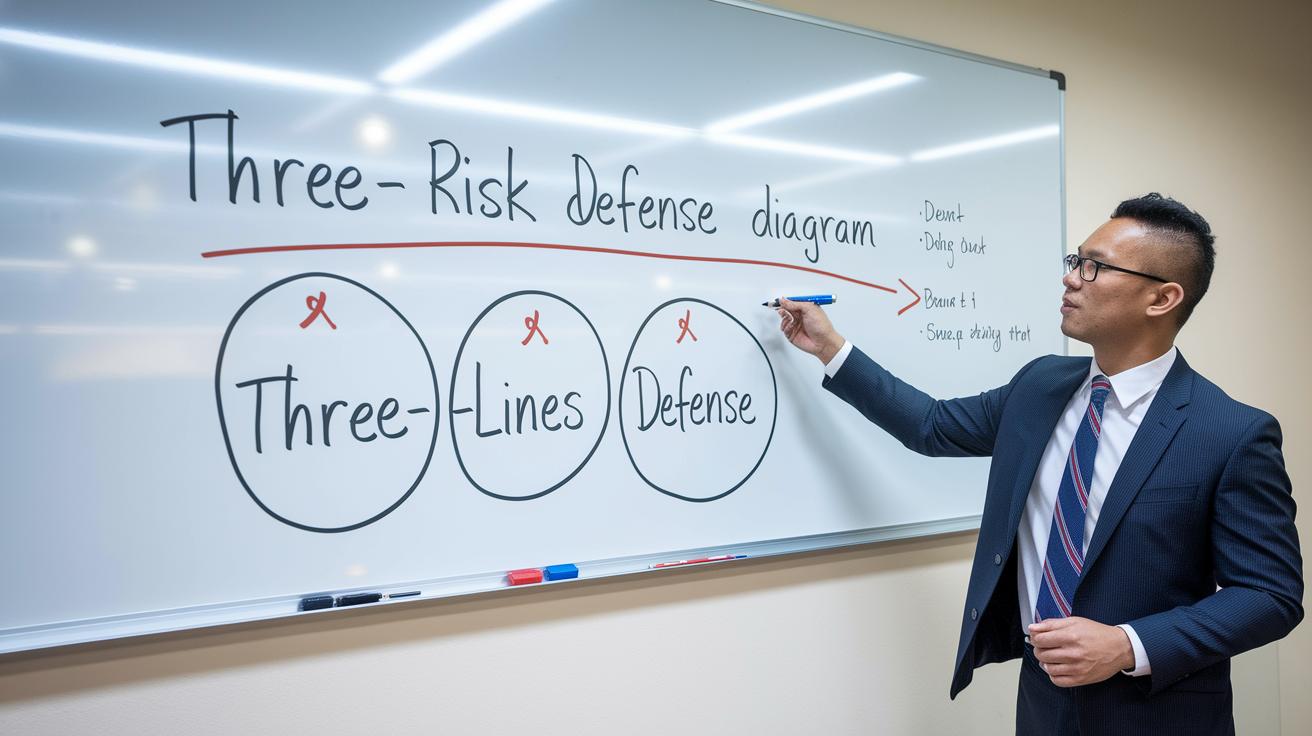
The three lines of defense risk management framework helps a company handle risks by clearly laying out who does what at every level. In 2020, the model shifted its focus, moving beyond just protection to fostering growth and adding value.
The first line consists of frontline staff and operational managers. They design and use controls as part of their everyday work, like a chef carefully following a trusted recipe, measuring each ingredient to get the perfect flavor.
Next, the second line brings in the risk management and compliance teams. They act like a coach on the sidelines, offering guidance, setting policies, and running risk checks to support those on the front line when things get tricky.
Finally, the third line is the internal audit team. They work independently to review the controls and report directly to senior leadership. This ensures any issues are caught early and helps break down silos in the company.
Together, this layered approach not only cuts costs and prevents redundant work but also drives growth and aligns risk management with the company's overall strategy.
First Line of Defense: Operational Frontline Tactics in Three Lines of Defense Risk Management

Frontline staff and operational managers own the risk and make sure internal controls work every day. They handle routine tasks to manage both operational and non-financial risks, forming the core of the company’s risk management strategy.
Every day, these teams make sure work follows the right standards while quickly fixing any issues. They interact directly with customers, production lines, and service points to stop risks before they grow into bigger problems.
- Design and carry out control activities
- Spot and evaluate operational risk exposures
- Follow policies in daily work routines
- Do initial risk checks
- Pass on issues to the second line
- Monitor how effective controls are
Frontline teams weave controls into every part of their day, whether they are checking transactions or keeping quality in production. They constantly feed useful feedback into the company’s broader risk guidelines. For example, a customer service rep may follow specific routines that reflect overall company policy, much like following a step-by-step recipe. This close connection keeps risks in check and helps strengthen overall governance. When they see something risky, they can quickly alert the risk management or compliance teams so that issues are taken care of fast. By putting these practical steps in place every day, frontline teams help protect the company’s assets and support strong leadership in managing risk.
Second Line of Defense: Secondary Monitoring Practices in Three Lines of Defense Risk Management

Risk management and compliance teams serve as our helpful second line. They work alongside the frontliners, guiding everyday operations with clear oversight and friendly advice. They set up company-wide policies and use simple risk assessment methods to keep daily controls within safe limits. They even use handy tools like the risk assessment matrix (https://dealerserve.com?p=844) to score and prioritize risks, helping to catch problems early. In short, they both support and question frontline actions to ensure everything follows the rules.
They perform regular compliance reviews and offer ongoing guidance, planting the seeds of best practices throughout the company. Their continuous feedback and straightforward instructions help teams understand risk boundaries and improve how they work. With regular oversight and clear steps for reporting issues, they build stronger governance and accountability.
Oversight and Advisory Roles
Team members set up policies and create a common language for talking about risk. They also provide training and one-on-one guidance so every team member knows their part in managing risk. For example, an advisor might say, "Think of these policies as the blueprint that keeps our work on track." This simple approach makes it easier for everyone to relate and follow along.
Monitoring and Reporting Functions
Regular compliance checks, user-friendly risk dashboards, and set reporting schedules help the team keep things on track. They stick to plain procedures to spot, record, and escalate issues, which means any potential risk is dealt with quickly and effectively.
Third Line of Defense: Independent Assurance Review in Three Lines of Defense Risk Management

Internal audit has an important job. They review risk management and control processes on their own, making sure everything works as planned. Their work helps the board see any weak spots and keeps accountability strong. I like to think of it as a thorough check-up that shines a light on areas needing improvement.
Auditors follow a clear plan based on risks they think are most important. They dig into the details with careful fieldwork and use smart sampling to see how things really happen every day. Reporting directly to senior management and the board, they serve as a trusted checkpoint that supports stronger risk management and better governance.
Audit Planning and Execution
Auditors kick things off by making risk-based plans that highlight key areas to review. They then roll up their sleeves with detailed fieldwork and practical sampling to collect the information they need. This careful approach makes sure any gaps in internal controls aren’t missed and can be fixed.
Reporting and Follow-up
The audit team compiles clear, straightforward reports to share their findings. These reports are discussed at board meetings where everyone talks through the issues and tracks the steps to fix them. Plus, follow-up checks, including re-testing, make sure that the corrective actions work as they should.
Integrating the Three Lines: Building an Integrated Oversight Framework for Risk Management
Bringing the three lines together creates a connected system that cuts through silos and unites the whole company under one clear plan. By using shared risk language, planning together, and keeping communication open, the framework helps protect assets while fueling growth. Everyone works as a team to make sure daily operations, oversight tasks, and independent reviews match the company’s goals. This teamwork opens up ongoing dialogue, letting risk management evolve alongside the business.
Below is a simple HTML table that highlights the main roles and activities for each line:
| Line | Main Role | Key Actions |
|---|---|---|
| First Line | Day-to-Day Management & Staff | Put controls in place, handle daily risks, and report issues |
| Second Line | Risk & Compliance Oversight | Create policies, guide risk checks, and monitor compliance |
| Third Line | Independent Audit | Review controls, check their effectiveness, and advise the board |
This unified framework joins every part of the organization, ensuring that assets are safeguarded while also supporting smart, strategic growth.
Best Practices for Implementing Three Lines of Defense Risk Management
When everyone knows exactly what to do, the three lines of defense system works best. You need to clearly define what each team does, the frontline staff, the risk management crew, and internal audit. This means spelling out who builds the controls, who keeps an eye on them, and who makes sure they all work together. When every person understands their role, risks can be spotted early, and decisions get made quickly.
Next, it's important to build a culture that really cares about managing risk. Leaders should set a friendly tone by encouraging smart behaviors every day. Regular team chats and hands-on training sessions can help show how each task, no matter how small, contributes to a safer work environment. It also helps that everyone feels valued and understands that careful work is key to the company's success.
Finally, always keep an eye on ways to improve. Regular check-ups on how the system is working go a long way. Scheduling simple reviews and using a step-by-step risk assessment can make a big difference. When leaders steer these ongoing checks, the whole process stays fresh and ready to handle change. In the end, a little regular tweaking can make the defense framework strong, agile, and ready for growth.
Real-World Case Study: Applying Three Lines of Defense Risk Management in Action
A big U.S. bank once faced a huge $250 million penalty because its internal controls weren’t strong enough to catch compliance slip-ups. This incident clearly shows that the bank missed a step when it came to evaluating risk mitigation. If they had set up a solid three-lines defense, where the front-line teams keep a careful eye out, while risk management and internal audit offer a second, independent check, issues could have been spotted early. Imagine the confidence and peace of mind that early detection brings, both in saving money and protecting a trusted reputation.
In this case, the lack of clear roles and proper oversight meant warning signs slipped by unnoticed. Strengthening the process with well-defined responsibilities across all teams helps everyone stay alert and tackle risks before they grow into expensive problems. It’s like having a team where each member knows their exact part, ensuring smooth, simple action when something goes off track.
Adapting Three Lines of Defense Risk Management Beyond Financial Services
Many organizations outside of finance, like hospitals, manufacturing plants, and government offices, are now using the three lines model to keep roles clear and risks under control. They assign teams for daily tasks, risk oversight, and independent reviews, all tailored to fit their own setup. For instance, a hospital might have nurses and medical staff watching over patient care, a dedicated risk team creating safety policies, and an internal board doing regular checks to make sure everything runs smoothly. Sometimes, mixing up these roles or having teams work alone can slow down how quickly they handle risks. Clear chats and defined tasks that match each team’s skill set are key.
In practice, tweaking this model means setting up control routines and risk checks that match each industry. Manufacturing plants might do daily quality checks like the first line of defense, while regulatory bodies lean on independent reviews to catch any non-compliance. By pinpointing the best controls and keeping reviews current, these organizations can react to risks faster and boost compliance. This customized approach helps create a smoother workflow and stronger results, proving that the model works well even outside the world of finance.
Final Words
In the action, we explored the three lines of defense risk management framework, starting with frontline tactics and moving to independent assurance. We broke down key roles and responsibilities, showing how an integrated oversight framework promotes clarity and efficiency. The article highlighted practical strategies to create a secure financial future using three lines of defense risk management. We also saw real-world case studies that illustrate how effective controls lead to better outcomes. Embrace the insights shared and move ahead with confidence, knowing that three lines of defense risk management builds robust protection for your financial decisions.
FAQ
What are the 1st, 2nd, and 3rd lines of defense in risk management?
The 1st, 2nd, and 3rd lines of defense define layered roles in risk management. The first line handles daily controls, the second oversees risk and compliance, and the third offers independent audit assurance.
How does the three lines of defense risk management framework work?
The framework works by clearly assigning roles; operational teams implement controls, risk specialists oversee processes, and internal audit independently checks risks to keep the organization aligned and secure.
What is an example of the three lines of defense in banking?
In banking, frontline staff manage daily operations, a risk team monitors compliance, and internal auditors review controls, ensuring effective risk management and protecting the institution’s assets.
What are key examples of first line risk management responsibilities?
Key first line responsibilities include designing controls, assessing operational risks, enforcing policies, and escalating issues, all of which are vital in managing daily operations and minimizing risk.
What roles does the second line of defense play in risk management?
The second line oversees risk management and compliance by developing policies, reviewing practices, and advising first-line teams, ensuring that operational activities stay within the organization’s risk appetite.
What functions are included in the COSO Three Lines of Defense or GRC three lines model?
The COSO Three Lines and GRC models incorporate operational control by the first line, risk oversight and advisory support by the second line, and independent evaluation by the third line to ensure effective risk management.
Which is the third line of defense under the risk framework?
The third line of defense is the independent internal audit function, which reviews risk management processes and control effectiveness while reporting independently to senior management and the board.
Where can I find a PDF on three lines of defense risk management?
PDFs on three lines of defense risk management are available from industry resource sites and financial service platforms, offering detailed guidelines, examples, and best practices for implementation.
