Are you sure your care is safe? Every hospital has hidden risks that can quietly shake patient trust. Imagine a quick safety check catching a mix-up in medication or a small data error before it turns into a real problem.
When we spot these issues early, it can really strengthen our healthcare system and protect everyone. By keeping an eye out for these potential hazards, we help make our hospitals a safer place for all.
Overview Of Risk Assessment In Healthcare

Risk assessment in healthcare is all about figuring out and managing hazards that can affect patients, caregivers, and even whole organizations. It’s a careful process that helps us spot risks early so that teams can take action to keep everyone safe. Think of it like doing a quick safety check-up before a busy day at work.
In this field, we look at several types of risks. For example, clinical risks involve checking for things like medication errors or surgical mishaps, while operational risks might come from issues like not having enough staff or miscommunications during hectic shifts. And then there’s the tech side, with information security risks where tiny flaws in electronic records can lead to bigger leaks of personal data. There are also legal risks, like problems with HIPAA, and financial risks such as billing mistakes or fraud. Each of these areas needs its own smart plan to figure out how likely a problem might be and how bad it could turn out.
The whole process starts by listing all possible risks. Then, these risks are carefully evaluated by comparing how likely they are and how severe the damage might be. Next, the most serious dangers get the spotlight so teams can focus resources wisely and put special fixes in place. Finally, by setting up controls and keeping an eye on things, healthcare facilities can manage risks smoothly over time. It’s a clear, step-by-step approach that not only improves patient care but also helps meet important rules and builds a safer, more resilient system.
Techniques And Tools For Healthcare Risk Assessment
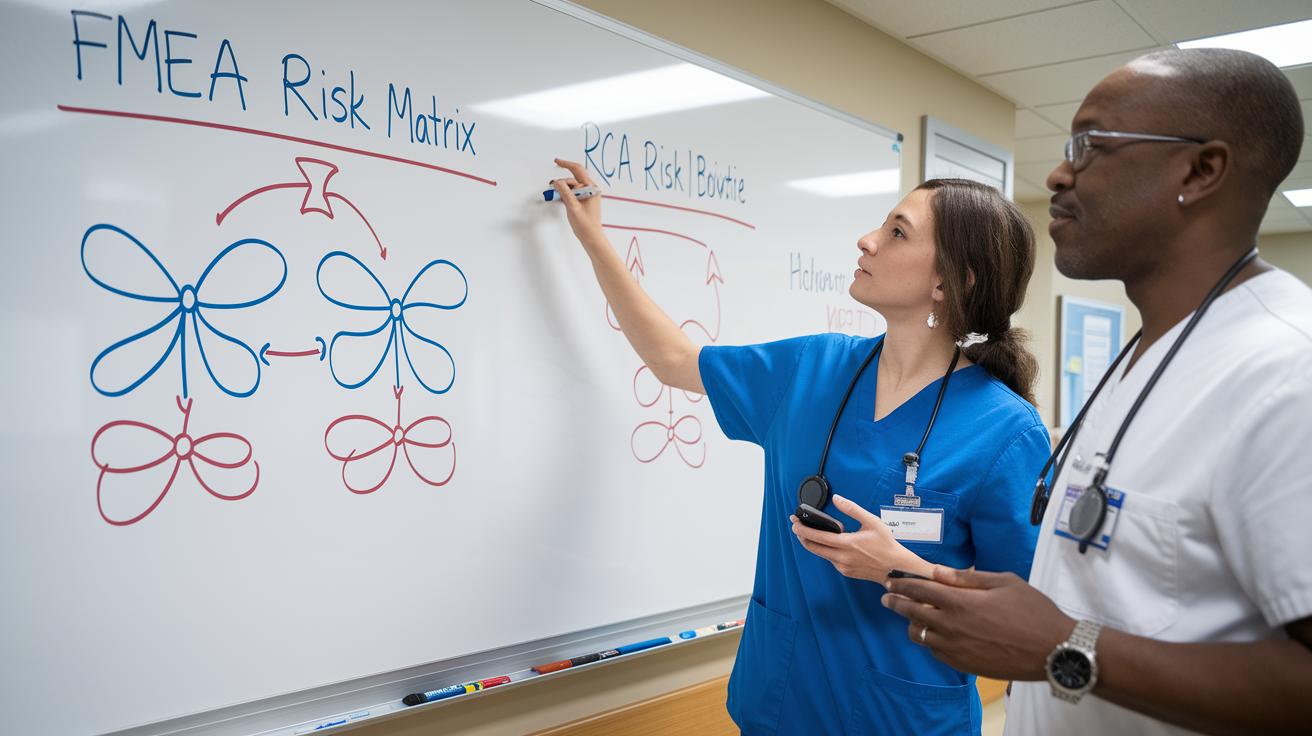
Choosing the right tools is key to spotting and understanding risks in healthcare. Using trusted risk assessment tools, like those at risk assessment tools, helps teams quickly spot clinical, operational, and tech challenges. This makes it easier to sort out issues from medication mistakes to problems with electronic health records.
| Technique | Purpose | Example Use Case |
|---|---|---|
| Failure Mode and Effects Analysis (FMEA) | Spot potential problems before they occur | Looking into risks of medication errors |
| Root Cause Analysis (RCA) | Find the real reasons behind issues | Examining what went wrong in a surgery |
| Risk Matrix | Balance the chance of risk with its impact | Sorting clinical threats by how serious they are |
| Bowtie Analysis | Lay out clear risk controls and barriers | Planning out ways to prevent problems |
Bringing these tools into everyday routines makes checking for hazards simpler and more precise. They help teams share information clearly while making sure risks are found quickly and fixed without delay. In truth, by mixing well-structured methods with trusted risk tools, healthcare teams can protect patients better and keep things running smoothly.
Regulatory Requirements And Compliance For Risk Assessment In Healthcare
Healthcare organizations need to work within clear legal rules to protect patient information, keep everyone safe, and ensure the organization runs smoothly. They have to record safety training, report any incidents, and manage risks carefully. This approach not only helps avoid fines but also creates a secure place where every team member knows exactly what to do in urgent moments. It also shows that the organization values a safe and transparent workplace.
The key rules they follow are:
- HIPAA Security Rule
- CMS Conditions of Participation
- The Joint Commission Standards
- FDA Medical Device Guidelines
- OSHA Workplace Safety
Regular checks and clear record-keeping are essential to staying compliant. Think of scheduled audits like a routine check-up for your car, they confirm that everything is operating as it should. Detailed logs of training and incidents provide a clear path that supports ongoing improvements in safety.
Implementing Risk Assessment Frameworks In Healthcare Settings

Choosing the right risk assessment framework is key to keeping both patients and staff safe. Healthcare leaders need tools that clearly point out where problems might pop up and help them focus on the worst dangers first. A simple plan gathers data, assigns easy-to-understand scores, and outlines clear steps to take, all while using patient grouping and flexible threat checks to guide smart decisions. It’s all about making safety checks smoother and boosting how well the system can handle surprises.
Failure Mode and Effects Analysis (FMEA)
FMEA dives into every step of a process to spot where mistakes could happen. It gives scores that show both how often an issue might occur and how serious it could be. This helps teams quickly see which problems really need fixing. For example, when you’re looking at how medications are given, FMEA can catch errors before they affect patient care and direct teams to act fast. It’s a clear, step-by-step way to keep risk under control.
ISO 14971 Standard
ISO 14971 explains how to manage risks throughout a product’s life. It calls for keeping detailed records, doing regular reviews, and weighing risks against benefits, basically making sure every step is documented. Healthcare teams use it to keep good, clear records of their risk checks and decisions. This standard makes sure that as new challenges and tech come along, safety plans keep getting better.
Risk Matrix Application
Using a risk matrix means plotting potential hazards on a simple grid that shows how likely they are and how big their impact could be. This visual tool helps healthcare leaders quickly spot which risks need immediate attention. It’s a straightforward way to balance the chance of something happening against the harm it could cause. This approach ensures that key threats are noticed early and dealt with before they grow into bigger problems.
Keeping risk assessment frameworks updated is a must for long-term safety. Regular checks, clear performance measures, and continuous training help teams stay on top of new challenges. By tracking outcomes and tweaking plans as needed, healthcare leaders can keep a resilient and open system that works for everyone.
Best Practices For Hazard Evaluations In Clinical Care

Effective hazard evaluations start with everyone working together. Teams meet regularly to review cases and share insights, and they also dig into data to see what might be off. For example, if a nurse spots an unusual reaction to a medication, that note becomes a key clue to stop similar issues in the future. Using daily checks with clear protocols means no little warning goes unnoticed. Routine case reviews and open discussions help each team member notice potential risks early.
Ongoing training and frequent audits boost safety and streamline how things run. Staff get hands-on training modules that show the best ways to spot problems early. Think of it like a fire drill where everyone practices for the unexpected. Clear discussions about risk help doctors, nurses, and admins act fast when needed. This team approach not only keeps patients safer but also builds a system that can adapt when challenges arise.
Case Studies On Successful Healthcare Risk Assessments

Risk assessments in healthcare can really lift the quality of care when done with clear, real-world methods. Two different groups recently showed how careful risk management can boost both patient safety and smooth operations. They proved that by spotting risks early, scoring them clearly, and taking quick action, teams can work better together and reduce mistakes.
Regional Hospital Medication Safety Program
At a local hospital, staff worked together on a four-step plan that used a FMEA-based method, which is a way to spot where things might go wrong, to catch medication errors early. They kept track of each risk by scoring its severity and chances, then put safeguards in place based on those scores. Over a year, this plan helped cut medication errors by 25%. For example, simple checklists were used in every step of giving out medication, so even small issues were recorded and fixed fast. It was a hands-on approach that not only made patients safer but also built trust among the team.
Community Clinic Operational Risk Project
A community clinic took another smart path by using predictive analytics, which means using old data to guess future needs, for staffing and scheduling. They set up a system that looked at past trends to predict busy times and possible stress in scheduling. Along with this, they offered detailed training that helped team members spot early signs of trouble. Over time, these changes helped lower operational problems by 15% and reduced the risk of HIPAA breaches, keeping patient details safe.
Each case shows that mixing data-driven methods with ongoing team involvement can really cut down on errors. In truth, these examples highlight the power of a structured approach to handle both patient care and behind-the-scenes operations efficiently.
Emerging Trends In Healthcare Risk Assessment

Advances in machine learning and AI are changing how hospitals and clinics keep an eye on risks. These tools work like watchful guards, catching issues as they happen. Imagine a system that keeps track of every bit of patient data and flags anything that looks out of place. This smart setup gives teams clear tips on what to do next. It not only makes patient care safer but also helps use resources in the best way, so help is always ready when needed.
Adding cybersecurity checks into this mix is a must now that healthcare is more digital. Tools that predict staffing needs make sure there are enough people around during busy times. Regular reviews and updates help make the system even better over time. In short, this approach builds a tough safety network that combines real-time data, proactive staffing, and solid cyber protections. The end result is a system that communicates well and keeps both patients and operations safe from cyber risks.
Final Words
In the action, this article broke down risk assessment in healthcare, covering everything from hazard evaluation and compliance rules to practical frameworks and innovative tools. It explained key steps to identify, score, and manage clinical, operational, and regulatory risks.
We got a clear look at case studies, best practices, and emerging trends. With this solid guide in hand, you can feel confident about making smart investing and personal finance decisions while securing your future.
FAQ
What does risk assessment in healthcare entail and what are some examples?
Risk assessment in healthcare involves identifying, evaluating, and managing hazards that affect patient safety, clinical care, and operations. Examples include evaluating medication errors, surgical risks, and data security challenges.
How can I access risk assessment resources like PDFs for hospitals and healthcare?
Risk assessment in hospital PDFs and healthcare PDFs provide step-by-step guidelines and detailed methods for evaluating risks. These resources help organizations adopt best practices for safety and compliance.
Why is risk assessment so important in healthcare?
Risk assessment in healthcare is essential because it reduces patient harm, supports regulatory compliance, and improves the overall quality of care, ensuring proactive management of potential hazards.
What risk assessment tools are commonly used in healthcare?
Risk assessment tools in healthcare, such as risk matrices, scoring systems, and detailed checklists, help quantify and prioritize risks. They make the evaluation process systematic and actionable for enhanced patient safety.
What types of risks exist in healthcare and how are they evaluated?
Types of risks in healthcare include clinical, operational, technological, and legal issues. Evaluations involve clear identification, scoring of severity and likelihood, and prioritization of hazards to guide mitigation measures.
What are the key principles and points of an effective risk assessment?
Effective risk assessment typically covers identification, evaluation, prioritization, control implementation, and continuous monitoring. These five points ensure that risks are systematically managed to protect patients and staff.
How do risk management examples in healthcare illustrate effective safety practices?
Risk management in healthcare examples show the practical application of identifying risks, applying structured tools, and following through with corrective actions, which builds a safer environment for both patients and staff.
