Have you ever noticed how one sudden drop in the stock market can shake even the best financial plans? One minute, stocks are on the rise, and the next, they fall like a wild roller coaster ride. A crash like that can change an investor's journey and sometimes uncover smart opportunities hidden in the chaos. In this post, we'll explain what causes these drops and how careful investing might help protect your money. Stick with us to learn how understanding these shifts can guide your finances toward a steadier path.
Understanding Stock Market Crashes
A stock market crash is a sudden, steep drop in share prices that shakes up investor confidence and leads many people to sell their stocks quickly. It happens when a weak economy mixes with basic problems in the market. For instance, if companies start earning much less money than usual, investors can get nervous and pull out their money fast.
Some key factors that might trigger a crash include stocks being too expensive and unexpected changes in government policies. Company profits are like a guide for stock prices. In the U.S., corporate earnings have grown about 8% each year, setting a kind of expectation for the market. But even when profits are strong, unforeseen issues can cause a sharp decline. Have you ever thought about how, back in 1929, a market crash wiped out fortunes overnight? That event still reminds us of the risks that can surface.
History shows us that even though the market can fall suddenly, its long-term trend is usually strong. Since 1928, the S&P 500 has posted gains in over 89% of all five-year periods, and no 20-year span has ever ended with a loss. This kind of stability can be reassuring for long-term investors. It tells them that while short-term drops are painful, they are often followed by robust recoveries fueled by steady earnings growth.
In the short run, a market crash can disrupt portfolios and quickly reduce wealth, which might affect retirement plans and savings. But in the long run, the market’s solid foundation offers hope. Investors learn to be ready for ups and downs while keeping an eye on future growth. Smart, careful decisions during these times can help protect and even build wealth.
Historical Precedents and Modern Parallels in Stock Market Crashes

If you look back at market history, you'll see that when everyone feels upbeat, hidden weaknesses can be lurking beneath the surface. Before World War I, investors overlooked growing geopolitical problems while stock prices soared, almost as if a crisis was impossible. Picture it like this: people were toasting to big gains even though dark clouds were gathering. Even now, with super high stock prices, many can’t help but wonder if the market might be as shaky as it was back then.
We’ve seen harsh downturns before. During the Great Depression and on Black Tuesday, a sudden change in how people felt about the market led to dramatic crashes. Today, similar signs are popping up. For example, tariffs during the Trump administration shook up global trade and put pressure on company earnings, sparking uncertainty everywhere. Experts compare this to past policy moves that rattled market stability and sent shockwaves through trading floors.
The 2008 crisis stands out as a clear example. Risky financial behavior paired with policy mistakes brought the market crashing down in a flash. (If you look up "market crash 2008," you'll notice how quickly good vibes turned into sheer panic.) Even though the S&P 500 keeps changing, many stocks still seem overvalued. This mix of ongoing uncertainty and market optimism makes you wonder if history is trying to repeat itself. Now, more than ever, investors should keep a close eye on government moves and global trade tensions, as these factors have often sparked sudden market reversals. In these uncertain times, it pays to think carefully about your next investment steps.
Market Indicators Signaling an Impending Stock Market Crash
When you look at the market, you might notice a few warning signs that could mean a crash is near. One common sign is a yield-curve inversion, which happens when short-term interest rates climb above long-term ones. This unusual flip can be a hint that the economy might slow down soon. And then there's the volatility index, or VIX. When the VIX jumps suddenly, it's like a red light telling us that investors are losing their confidence. Have you ever seen the VIX spike on days when the market slips? It might be time to be extra cautious.
On a bigger scale, think about margin debt. When investors borrow a lot of money to invest, things can get risky if market prices start dropping. Another clue is a broken trendline. If a long-standing trend suddenly breaks, it may be a sign that the overall market mood is shifting. Experts have noted that since 1950, the S&P 500 has seen an average yearly drop of 14% during turbulent times. It reminds us that big downturns, though scary, are not all that rare when times get tough.
Lastly, keep an eye on the U.S. dollar. A very strong dollar can hurt multinational companies by reducing their profits from abroad. While GDP mostly looks at service output, stock indexes are more about goods and manufacturing. So, if you see the dollar getting strong while other sectors struggle, it might be an early hint that a change in market direction is coming.
- Watch for yield-curve inversions
- Monitor sudden spikes in the VIX
- Keep an eye on rising margin debt
- Note any broken trendlines
- Observe the strength of the U.S. dollar
These signals can help guide you to adjust your strategy before a major market drop happens.
Behavioral Dynamics and Investor Psychology During Crashes

When markets tumble, fear and greed really take over. Investors often rush to sell, much like a row of dominoes falling one after the other. Picture a hectic trading floor where one sudden sell order sets off a wave of panic selling. This group behavior can deepen a market crash faster than any single economic shock.
Choppy markets tend to eat into your returns, almost like a fourth rule of investing. For example, data shows active fund managers fell short of benchmarks 65% of the time in 2024 and 90% over the past decade. Even more striking, from 2001 to 2025, only 19% of S&P 500 stocks outperformed the index, with an average return of 452% compared to just a 59% increase for the median. And only about 4.21% of top funds have managed to stay in the upper half over four years. It’s clear; even winners rarely keep their crown for long.
These numbers highlight how our emotions can steer us into mistakes during wild market swings. Investors caught up in the frenzy might sell too early or take on needless risks, only to watch their returns shrink. Recognizing these panic-driven moves can be a smart way to avoid impulsive decisions when the market gets chaotic.
Risk Management Tactics for Investors Amid a Stock Market Crash
When you’re investing, it helps to look ahead by 18 to 24 months instead of reacting to every quarterly earnings report. This longer view keeps you calm during bumpy times while you stick with companies that show solid profit trends. Using a solid risk assessment, a simple check of what might go wrong, can clear up confusion when prices suddenly drop. Think about it like planning your route before a long drive; being prepared helps you handle surprises without making impulsive decisions that could hurt your portfolio.
In tough market times, it pays to stick with tried-and-true strategies rather than chasing every bit of breaking news. History shows that markets often bottom out before recessions officially end. Staying disciplined and following a clear plan keeps you ready when the market turns upward. Even during downturns, keeping an eye on company performance and holding some cash in reserve puts you in a good spot for recovery. It’s like carefully piecing together a puzzle, each step matters.
Here are some key tactics to keep in mind:
- Diversification
- Rebalancing
- Quality holdings
- Cash reserves
- Hedging
- Sticking to a plan
Building a strong portfolio means being ready for market shocks without losing sight of your long-term goals. It takes a calm, measured approach to protect your assets and even spot buying opportunities when prices drop. By staying disciplined, watching important risk factors, and checking your strategy with a regular risk assessment, you give your investments the best chance to bounce back when the market improves.
Forecasting and Preparing for Future Stock Market Crashes
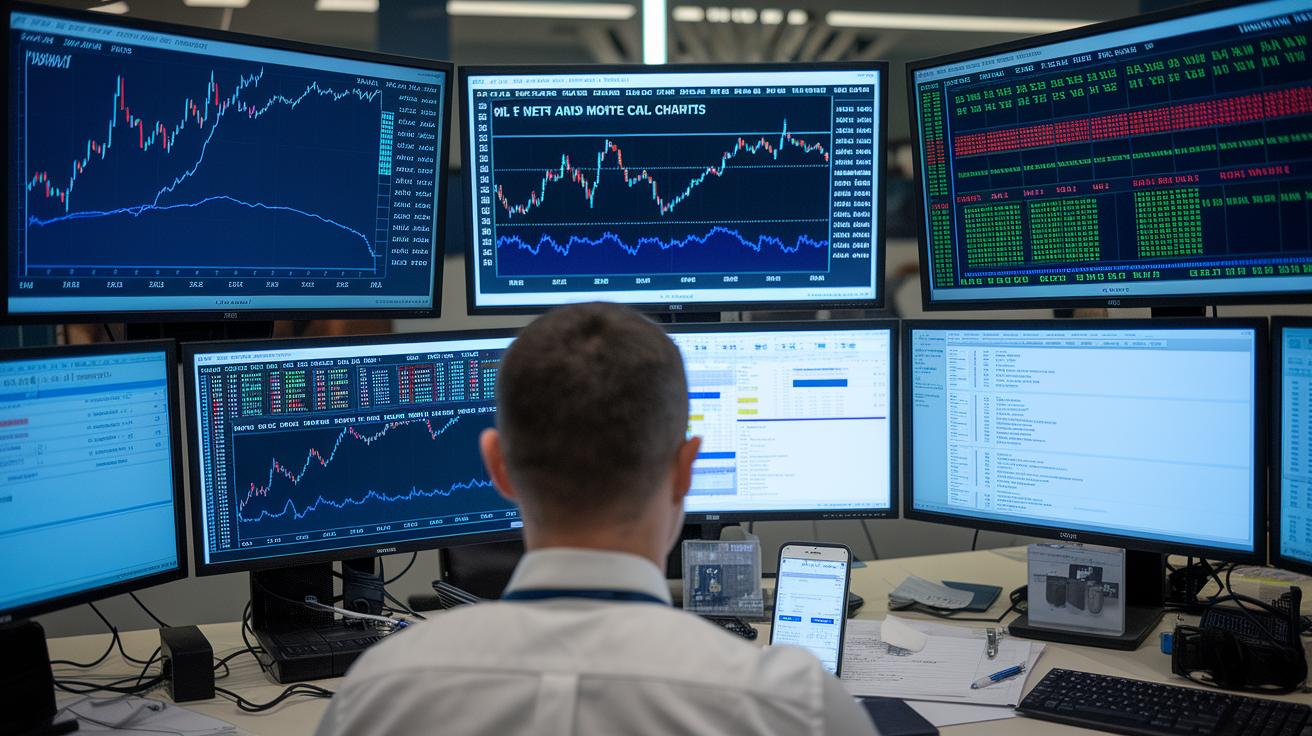
Investors today aren’t just looking back at historical averages. They’re diving into new techniques like machine learning, which uses smart algorithms to find trends, and Monte Carlo simulations that run through many scenarios to see possible outcomes. For example, one neural network model spotted a sharp market downturn weeks before it hit, letting investors adjust their portfolios to cut losses.
Natural language processing, a tool that helps computers understand text from news and social media, now gives real-time insights into shifts in market mood. Investors even simulate different future worlds, from changes in global trade to disruptive tech surprises, to get ready for unexpected moves. One sentiment tool, for instance, picked up a sudden drop in investor confidence, which spurred a timely asset rebalance.
Key market risks today include policy shifts and quick changes in investor mood driven by real-time data. Advanced forecasting tools update these risks continuously, letting investors fine-tune their risk strategies as new data comes in.
| Method | Description |
|---|---|
| Machine Learning | Smart algorithms that detect trends and predict market moves |
| Monte Carlo Simulations | Runs many scenarios to test how well a portfolio might hold up |
| Natural Language Processing | Analyzes news and social media to understand market sentiment |
Here are a few steps to help prepare for future market downturns:
- Bring in advanced quantitative models for a sharper analysis.
- Use dynamic scenario planning to mimic diverse market conditions.
- Mix emerging tech like sentiment analysis and real-time data into your strategy.
- Keep your risk factors fresh with the latest market insights.
- Test how well your portfolio would fare under various economic stresses.
By blending these forward-thinking forecasting tools with smart risk management, you can better ready your strategy for any future market crashes.
Final Words
In the action, this article trimmed down the core elements of understanding stock market crashes. We reviewed the causes, trends, and emotional pressures that shape these events.
We also looked at clear risk management tactics and forecasting tools that help investors steer through turbulent times.
The insights here remind us that even a stock market crash can teach valuable lessons about patience, planning, and staying focused. The future holds promise when we learn and adapt along the way.
