Ever wonder if a simple certificate could change your career? Data protection certification shows you truly care about privacy. Companies today can face heavy fines for privacy mistakes, so earning this certificate tells everyone you are trustworthy. It’s not just a piece of paper, it proves you know global privacy rules and are set for bigger challenges. In today’s job market, this certificate might be the boost you need to stand out and grow your career.
Comprehensive Overview of Data Protection Certification

Data protection certification shows that a professional or a company meets worldwide privacy rules like GDPR (which protects how your personal data is used) and CCPA (a similar rule in California). You can learn more about what data protection means by checking out this link: what is data protection. These certifications come from well-known groups such as IAPP, ISACA, or PECB. They aren’t official government stamps, but their worth comes from how strict the process is and the reputation of the organization behind them.
In today’s world, getting a data protection certification is a smart move. Since May 2018, GDPR fines have exceeded €2.8 billion, showing just how important it is to stay on top of privacy rules. Certifications like CIPP, which offers four regional tracks, along with CIPM and CIPT, cover legal, managerial, and tech parts of privacy. You might also see certifications like CDPSE for privacy solutions, PECB CDPO focusing on GDPR, the international standard CDP, AIGP for AI governance, CISSP (often paired with HCISPP for specific needs), and PrivacyTrust.
People and companies invest in these certifications to build trust and show their dedication to keeping data safe. Whether you’re a website owner, a compliance expert, a marketer, or a legal advisor, having this credential helps you prove that you truly understand global data protection standards. This trusted certification not only boosts your career but also gives your company a leg up in today’s market, which cares more than ever about privacy.
Data Protection Certification Empowers Career Growth

If you’re planning a career in privacy and security, getting a data protection certification can really open doors. Take the CIPP certification, for example. You’ll need to pass a standard exam and join the IAPP. Plus, it offers four different tracks, US, EU, Canada, and Asia, to fit various legal needs. It’s a bit like getting ready for a special trade test by building a solid base.
The CIPM and CIPT certifications follow a similar path. Not only do you have to pass an exam through IAPP, but you also need to show at least two years of hands-on experience in a privacy role. Think of it as proving you’ve already done enough work on the ground before stepping up into leadership.
Then there’s the CDPSE by ISACA, which requires you to be a member of ISACA and have at least three years of experience in privacy or security. On the other hand, the PECB CDPO targets GDPR compliance officers and usually asks for two years in the field. In these cases, you might also need to pay a fee, verify your background with proof of education or previous work, and agree to follow a professional code of conduct.
It’s worth noting that no single global organization controls these certifications. Instead, trusted groups like IAPP, ISACA, and PECB set the standards. Here’s what they all have in common:
- Each certification builds on real, hands-on expertise in privacy systems.
- The application process usually involves a thorough review of your work history.
Curriculum and Training Resources for Data Protection Certification

IAPP offers a variety of study materials to help you build a strong foundation in privacy law, company rules, and tech. You can choose from live online seminars, in-person workshops, or on-demand lessons, each one breaking down tough ideas into easy-to-understand pieces. It’s a bit like having a friendly mentor walk you through the key points.
ISACA’s CDPSE tools give you vendor-neutral study guides, practice tests, and review webinars. They’re like a toolkit that lets you check your progress and spot areas for improvement. You can also explore extra tools like DSAR control frameworks, privacy risk assessment modules, and generators for drafting Privacy Policies, Terms & Conditions, and Cookie Policies. Imagine these as blueprint guides that help you smoothly set up your company’s privacy protocols.
| Resource Type | Description |
|---|---|
| Live Online Seminars & In-Person Workshops | Interactive sessions by IAPP that break down concepts in a friendly way. |
| On-Demand Digital Lessons | Easy-to-follow modules covering privacy law and technology. |
| ISACA Study Guides & Practice Tests | Resources that help you track your progress and fill in knowledge gaps. |
| Third-Party Tools | Exam simulators, question banks, and short boot camps to boost your study. |
These carefully chosen resources combine flexibility with depth, making it easier for you to master the certification course and stay on top of the quickly shifting field of data protection.
Exam Structure and Preparation for Data Protection Certification

For CIPP, CIPM, and CIPT, you'll tackle 90 multiple-choice questions in 2 hours. You need about 70% to pass. CIPP costs US $550 while CIPM and CIPT each cost US $275. The CDPSE exam has 100 questions in 2 hours with a fee of US $300. If you go for the PECB CDPO certification, you’ll answer 60 questions over 3 hours, and it costs €777.
You can only retake an exam after waiting 30 days, and you get up to three attempts per year. With pass rates hovering between 60% and 70%, a steady, well-planned study routine is really important.
Many folks use a mix of official practice exams, flashcards, and even 1-day exam prep workshops to get ready. Have you ever noticed how a day-long workshop can really boost your confidence and readiness? Breaking your study time into focused and manageable chunks is a great way to lock in key ideas and build the stamina you need for the exam.
Comparison of Top Data Protection Certification Programs

Comparing data protection certifications can be a little like comparing different routes on a road trip. Each one has its own advantages and challenges. To keep things simple, we've put together a clear table that shows nine popular certifications available right now. You can easily see details like the organization behind each certification, the main focus area, the exam fee, how long the certification lasts, and what you need to do to recertify. It’s like having a cheat sheet that highlights the key traits whether you’re leaning towards legal rules, management skills, tech know-how, or security expertise.
For example, if legal compliance is your priority, CIPP might be right up your alley. Conversely, CIPM is all about boosting your management skills, while CIPT leans more towards technology. This easy comparison helps you decide which path fits your career goals best.
| Certification | Issuer | Focus Domain | Exam Fee | Validity Period | Recertification Requirements |
|---|---|---|---|---|---|
| CIPP | IAPP | Legal Compliance | US $550 | 2-3 years | CPE credits |
| CIPM | IAPP | Management | US $275 | 2-3 years | CPE credits |
| CIPT | IAPP | Technology | US $275 | 2-3 years | CPE credits |
| AIGP | PrivacyTrust | AI Governance | US $400 | 2-3 years | CPE credits |
| CISSP | (ISC)² | Security | US $699 | 3 years | Annual CPE credits |
| CDPSE | ISACA | Technology Solutions | US $300 | 2-3 years | CPE credits |
| PECB CDPO | PECB | GDPR Officer | €777 | 2-3 years | CPE credits |
| CDP | PrivacyTrust | International Standards | US $350 | 2-3 years | CPE credits |
| PrivacyTrust | PrivacyTrust | Overall Data Protection | US $400 | 2-3 years | CPE credits |
Choosing the right certification is like picking the best recipe for your career success. Each certification has its own mix of ingredients, be it exam costs, focus areas, or recertification rules, that can help you build the skills you need in today’s competitive market. Plus, the recurring requirement for ongoing learning means you’ll always stay up to date with international standards and changing rules.
So, whether you want to focus on legal aspects, become a manager, dive into tech innovations, or sharpen your security skills, this comparison chart is a handy tool to guide your next step. Have you ever thought about how the right certification might open up new opportunities for you? Now’s the time to explore those options and take control of your professional journey.
Career Benefits and Professional Outcomes of Data Protection Certification
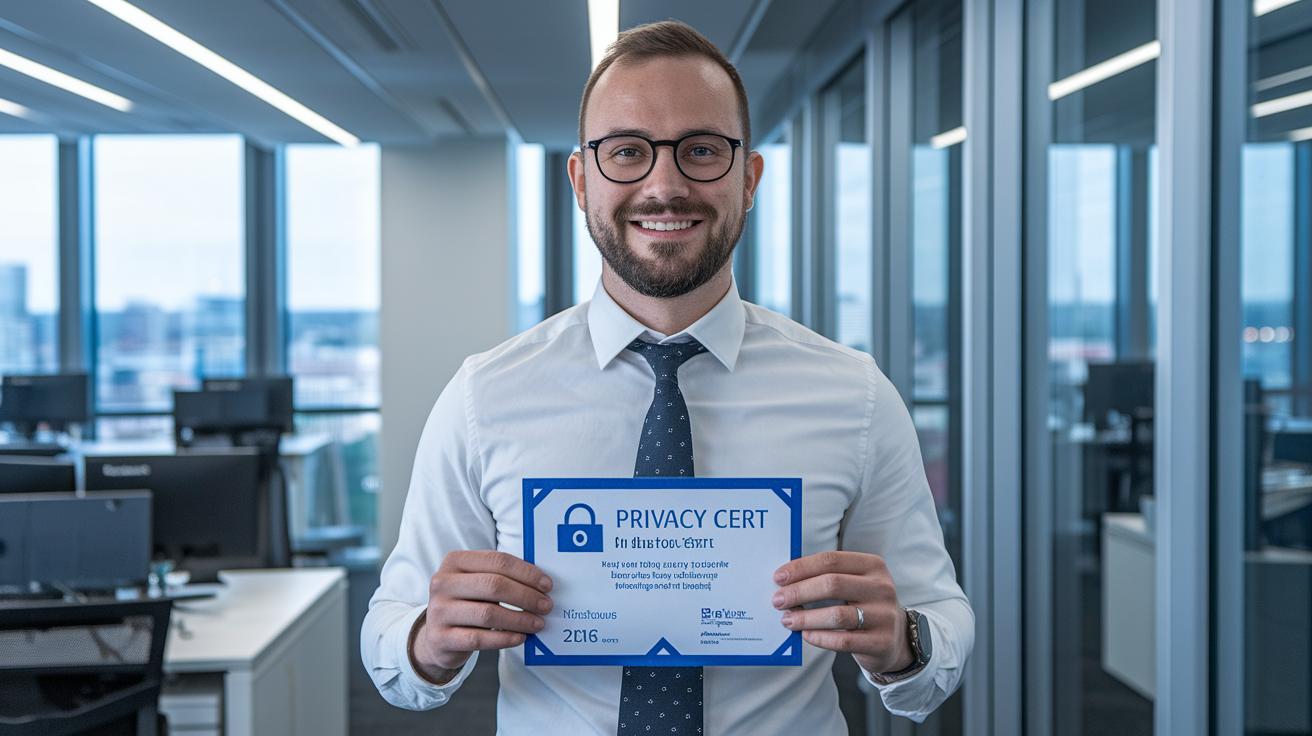
Getting a data protection certification can really change your career path. Certified experts often land roles like Data Protection Officer, privacy consultant, compliance manager, or legal advisor. These positions usually pay between US $90K and US $120K. Imagine saying, "I not only help keep data safe but also boost my income." It’s like moving from doing basic IT work to leading a team focused on protecting company data.
Law firms and consultancies value these certifications as proof of their expertise. When a firm displays its privacy and security credentials, it often attracts new clients and can charge higher rates for its services. It’s a bit like how a chef’s secret sauce can make an ordinary meal feel extra special.
Certified professionals also play a big part in reducing the risk of data breaches. With GDPR fines topping €2.8 billion since 2018, this extra layer of protection helps businesses avoid heavy penalties while building trust with their customers.
Today, employers are increasingly looking for certifications such as CIPP, CIPM, CIPT, or CDPSE. Having one of these on your resume not only strengthens your skills but also opens doors to higher-level opportunities, better pay, and distinctive roles in the competitive world of data protection.
Regulatory Frameworks and Standards Covered by Data Protection Certification

Data protection certifications serve as your friendly guide to mastering privacy rules both at home and abroad. They walk you through key regulations like the EU’s GDPR (a set of clear data protection rules enforced since May 2018) and the UK Data Protection Act 2018, making it easier for you to understand and apply these standards. For example, if you focus on CIPP/E, you’ll dive into EU regulations, while CIPP/US covers privacy laws in the United States at both federal and state levels. It’s like having a ready-made toolkit that helps you meet high privacy expectations.
These programs also spotlight global standards such as ISO 27701, a set of rules that extend privacy guidelines, and ISO 27001, which deals with information security management. Certifications like CDPSE and CISSP put a strong emphasis on risk management and technical security. They teach you how to carry out risk assessments and implement security frameworks that match ISO/IEC standards, preparing you for privacy challenges at every turn.
In truth, by aligning with rules from trusted bodies in the EU and US, these certifications show employers that you genuinely care about strong privacy and security. It’s like following a clear, step-by-step roadmap that builds your credibility in today’s data-driven world.
Delivery Methods and Course Costs for Data Protection Certification

If you're thinking about boosting your data protection skills, there's a bunch of ways to get started. One of the easiest methods is using on-demand digital lessons. These lessons give you access for about 60 days, and they run roughly around US $495. This lets you learn at your own pace and go over topics as many times as you need.
For those who prefer an interactive vibe, live webinars might be your thing. They give you a chance to ask questions on the spot and clear up any confusion immediately. Then there are in-person boot camps – short, intensive 2-day sessions that cost between US $1,200 and US $2,495. These boot camps offer hands-on instruction in a focused, friendly setting.
If you're the type who likes self-study, you'll find plenty of guides that let you set your own schedule. Some providers also offer bundled extras like exam simulators and question banks for an extra US $150. These bundles pack in extra tools to help you feel more confident when tackling the real exam.
All in all, the total investment for data protection certification can range anywhere from about US $300 to US $2,500, exam fees included. For instance, the official IAPP training packages start at around US $2,495 and add an exam fee of US $550. And remember, once you're certified, you'll need to recertify annually. This includes a Continuing Professional Education (CPE) reporting fee of roughly US $125 to US $200 per cycle, so you stay sharp with the latest data protection insights.
Final Words
In the action, we explored the value of data protection certification through eligibility requirements, training resources, exam formats, and comparisons of top programs. We examined how these credentials help verify adherence to standards like GDPR and strengthen professional credibility.
The article provided a clear guide for boosting your market insight and securing long-term financial stability. Keep moving ahead with confidence, knowing that a solid grasp of data protection certification can pave the way for smart investing and secure financial progress.
FAQ
What is data protection certification for employees?
Data protection certification for employees shows that workers understand privacy rules and how to handle data properly, enhancing the company’s trust and reducing compliance risks.
How is data protection certification online available?
Data protection certification online allows you to complete courses and exams virtually through digital modules, webinars, or self-study guides, making it flexible and accessible.
What does CIPP certification signify?
CIPP certification signifies that you have a strong grasp of privacy laws and practices, demonstrating your ability to work with global data protection standards.
How does a company benefit from data protection certification?
Data protection certification for companies proves that their teams follow data privacy standards, boosting customer trust while helping manage compliance risks.
What is the typical cost of data protection certification?
Data protection certification cost varies from a few hundred to over a thousand dollars, depending on the program and extra training materials provided.
Is there a free option for data privacy certification?
Data privacy certification free options exist, though they might offer less comprehensive material compared to paid programs that include detailed study aids.
What does IAPP certification cover?
IAPP certification covers industry-recognized credentials like CIPP, CIPM, and CIPT, proving your expertise in privacy regulations and enhancing your career opportunities.
How much does a CIPP certification cost?
CIPP certification cost is typically around US $550 for the exam fee, with additional charges possible for training resources and preparation materials.
Which certification is better, CIPP or CIPM?
CIPP focuses on privacy law fundamentals while CIPM emphasizes managing privacy programs, so the best choice depends on whether you want legal expertise or program management skills.
How much does the CDP exam cost?
The CDP exam cost is usually around US $300, though fees may vary based on location and any included study aids.
Is a CIPP certification worth pursuing?
A CIPP certification is worth pursuing as it boosts credibility in privacy work and can lead to better job prospects and career advancement in data protection.
What is a CDP certification?
A CDP certification demonstrates knowledge in data protection practices, signifying that you can manage and secure personal data effectively in line with privacy standards.
Which organizations issue data protection certifications?
Data protection certifications are issued by renowned organizations like the International Association of Privacy Professionals, ISACA, ISC2, CompTIA, the Data Management Association, and Future of Privacy Forum.
